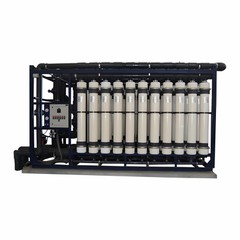
Physical Treatment Principles
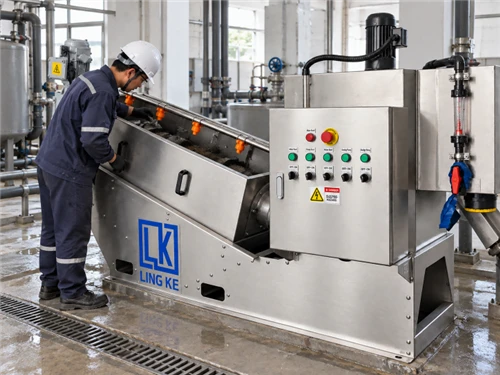
Physical treatment is the first step in wastewater treatment, primarily using physical methods such as sedimentation, filtration, and separation to remove suspended solids, particulate matter, and some organic matter from wastewater. For example, in a sedimentation tank, heavier particles in the wastewater naturally settle to the bottom due to gravity, forming sludge, while clearer water flows out from the top. Furthermore, equipment such as screens and grids are widely used to intercept large debris, preventing it from entering subsequent treatment units.
Chemical Treatment Principles
Chemical treatment involves adding chemical agents to react with pollutants in the wastewater, generating insoluble precipitates or gases, thereby removing the pollutants. Common chemical treatment methods include neutralization, coagulation, and oxidation-reduction. For example, in the coagulation process, coagulants (such as polyaluminum chloride) are added to the wastewater, causing colloidal particles in the wastewater to destabilize and aggregate into larger flocs, which are then removed through sedimentation or filtration.
Biological Treatment Principles
Biological treatment is the core of wastewater treatment, utilizing the metabolic activity of microorganisms to decompose organic matter in wastewater into harmless substances such as carbon dioxide and water. Biological treatment is mainly divided into two types: aerobic treatment and anaerobic treatment.
Integrated Treatment Processes
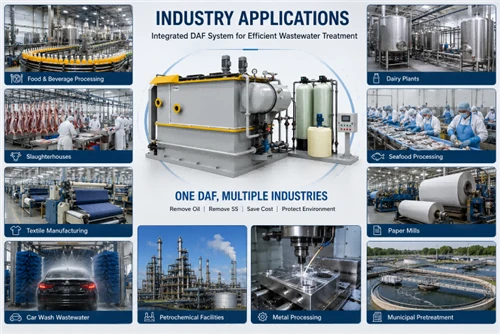
In practical applications, wastewater treatment equipment often employs a combination of multiple treatment processes to achieve more efficient and stable treatment results. For example, the A²/O process (anaerobic-anoxic-aerobic) combines anaerobic, anoxic, and aerobic treatment units, simultaneously removing organic matter, nitrogen, phosphorus, and other nutrients from wastewater. This process is widely used in municipal wastewater treatment plants.