
Industrial & Commercial Water Purification Systems: Modular RO, UF, and Treatment Solutions
Industrial and municipal water treatment projects require equipment engineered for stable continuous operation, strict permeate quality, and predictable lifecycle operating costs. This page serves procurement engineers, EPC contractors, and system integrators looking for factory-direct water purification equipment—including skid-mounted reverse osmosis units, containerized plants, ultrafiltration systems, and supplementary environmental hardware. Built to match precise hydraulic and chemical parameters, these systems eliminate scaling risks, minimize energy consumption per cubic meter of permeate, and integrate directly into existing plant automation architectures.
-
![High-Pressure NF System For Wastewater Zero Liquid Discharge]() High-Pressure NF System For Wastewater Zero Liquid Discharge
High-Pressure Nanofiltration (HPNF) serves as a critical pre-concentration and selective separation stage within Zero Liquid Discharge (ZLD) and Minimal Liquid Discharge (MLD) systems. By...
-
![Organics Removal NF Water Purification Unit]() Organics Removal NF Water Purification Unit
The Organics Removal NF Water Purification Unit utilizes advanced nanofiltration (NF) membrane technology to systematically reduce dissolved organic matter, natural organic matter (NOM), color,...
-
![Skid-Mounted NF System For Process Liquid Purification]() Skid-Mounted NF System For Process Liquid Purification
A skid-mounted nanofiltration system provides a compact, factory-tested membrane separation solution for industrial process liquids requiring selective removal of dissolved contaminants.
-
![High-Rejection NF System For Heavy Metal Removal]() High-Rejection NF System For Heavy Metal Removal
Industrial High-Rejection NF Systems for Heavy Metal Removal & Water Reuse High-rejection nanofiltration (NF) systems provide membrane-based treatment for industrial water and wastewater...
-
![NF Membrane Water Softening System]() NF Membrane Water Softening System
The NF Membrane Water Softening System utilizes advanced nanofiltration technology to selectively remove calcium, magnesium, and other multivalent ions. Designed for industrial applications...
-
![Industrial NF Membrane Separation & Concentration System]() Industrial NF Membrane Separation & Concentration System
Industrial NF membrane systems are pressure-driven membrane processes used for the selective separation of dissolved components from water and process liquids.
Unlike standard filtration,... -
![Submerged UF Membrane Filtration Skid]() Submerged UF Membrane Filtration Skid
A Submerged UF Membrane Filtration Skid is a packaged membrane filtration system using ultrafiltration membrane modules (typically PVDF hollow fiber) immersed directly inside a membrane tank.
-
![Microfiltration (MF) Solid-Liquid Separation System]() Microfiltration (MF) Solid-Liquid Separation System
Microfiltration (MF) Solid-Liquid Separation Systems use membrane filtration to separate suspended solids, fine particles, and biological contaminants from industrial liquid streams.
-
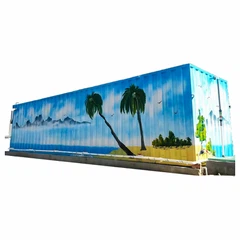
![Containerized UF Drinking Water Purification Plant]() Containerized UF Drinking Water Purification Plant
A Containerized UF Drinking Water Purification Plant integrates ultrafiltration membrane modules, feed and backwash pumps, automatic valves, precision instrumentation, PLC control systems, process...
-
![Pressurized UF Membrane Water Purification System]() Pressurized UF Membrane Water Purification System
A Pressurized Ultrafiltration (UF) Membrane Water Purification System uses pressure-driven hollow-fiber membranes to eliminate suspended solids, colloids, turbidity, bacteria, and protozoa....
-
![Skid-Mounted Industrial UF Water Pretreatment Unit]() Skid-Mounted Industrial UF Water Pretreatment Unit
A Skid-Mounted Industrial UF Water Pretreatment Unit is an engineered, factory-assembled membrane filtration package designed to remove suspended solids, colloids, fine particulates, bacteria, and...
-
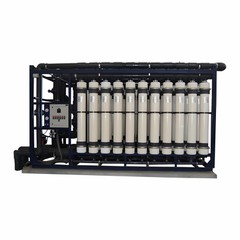
![Hollow Fiber UF Membrane Water Filtration System]() Hollow Fiber UF Membrane Water Filtration System
Our hollow fiber ultrafiltration (UF) membrane systems deliver high-efficiency separation of suspended solids, colloids, microorganisms, and turbidity down to 0.01 microns. Designed for modular...


Solutions
Municipal & Community Drinking Water Supply
Containerized and skid-mounted high-capacity reverse osmosis systems designed to reduce total dissolved solids (TDS), heavy metals, and microbiological contaminants below WHO drinking water standards.
Industrial Process Water Preparation
Multi-stage purification units supplying boiler feed water, electronics rinsing water, and manufacturing dilution water with controlled conductivity.
Commercial Bottled Water Production
Compact multi-filtration and RO lines engineered for continuous sanitary operation, stable flow output, and automated CIP (Cleaning-in-Place) compatibility.
Remote & Mobile Infrastructure
Plug-and-play containerized water treatment stations equipped with integrated power distribution, climate control, and pre-filtration for off-grid or emergency deployment.
Product Category
|
Category / Model |
Core Technology |
Capacity Range |
Primary Material |
Target Application |
|
LK-RO-C Series |
Containerized Reverse Osmosis |
3,000–10,000 L/h |
Carbon Steel Container / SS304 Internal Piping |
Remote sites, municipal water supply, rapid deployment |
|
LK-RO-S Series |
Skid-Mounted Industrial RO |
500–5,000 L/h |
SS304 / SS316L Frame and Pressure Vessels |
Factory process water, boiler feed, commercial production |
|
LK-UF Series |
Pressure-Driven Ultrafiltration |
2,000–20,000 L/h |
PVDF / PVC-U Hollow Fiber Membranes |
Surface Water Pretreatment, High-Turbidity Removal |
|
LK-MF Series |
Multi-Media and Activated Carbon Pretreatment |
Customized to Flow |
FRP / Carbon Steel Rubber-Lined Tanks |
Suspended Solids Reduction, Chlorine and Organic Removal |
|
LK-NaClO Series |
On-Site Electrolytic Generation |
50–500 g/h as Cl₂ |
Titanium Electrodes with Ruthenium-Iridium Coating |
Disinfection, Wastewater Sterilization, Municipal Dosing |
System Configuration
Pretreatment Subsystem: Multi-media filters containing graded quartz sand and anthracite remove suspended solids and turbidity down to less than 20 NTU. Activated carbon filters absorb free chlorine and organic molecules to protect downstream polyamide membranes from oxidation.
Chemical Dosing Unit: Automated dosing pumps inject antiscalant to prevent mineral precipitation (calcium carbonate, silica) on membrane surfaces, alongside pH adjustment chemicals when required by raw water chemistry.
Security Filtration (Cartridge Filter): 5-micron polypropylene (PP) melt-blown cartridge filters capture fine particulates escaping the primary media bed, preventing mechanical damage to high-pressure pump impellers.
High-Pressure Pumping Section: Vertical multi-stage centrifugal pumps (such as Grundfos or equivalent industrial grade) supply the requisite hydraulic pressure (1.0 to 2.5 MPa depending on feed salinity) required to overcome osmotic pressure.
Membrane Separation Assembly: Spiral-wound composite polyamide RO membranes housed in FRP or stainless steel pressure tubes execute selective ion and molecule separation.
Electrical & Control Cabinet: Centralized PLC controller (Siemens S7-1200 series or Schneider equivalent) coupled with real-time digital sensors monitoring feed pressure, permeate conductivity, flow rates, and tank level interlocks.
Treatment Process
|
Stage |
Process Description |
Primary Equipment / Media |
Target Removal Metric |
|
Stage 1 |
Coarse and Suspended Solids Removal |
Disc Filter / Raw Water Pump |
Suspended solids >50 μm |
|
Stage 2 |
Coagulation and Filtration |
Multi-Media Filter (Quartz Sand / Anthracite) |
Turbidity <1.0 NTU; SDI <5 |
|
Stage 3 |
Adsorption and Dechlorination |
Activated Carbon Filter |
Free chlorine <0.1 mg/L; organics and residual odor |
|
Stage 4 |
Scale Inhibition and Fine Filtration |
Micro-Dosing Pump + 5 μm PP Cartridge |
Colloidal particles; prevention of hardness precipitation |
|
Stage 5 |
Reverse Osmosis / Ultrafiltration |
High-Pressure Pump + RO/UF Membrane Elements |
95–99.4% TDS removal; up to 99.9% bacteria/virus removal |
|
Stage 6 |
Post-Treatment and Disinfection |
UV Sterilizer / Mineralization Cartridge / Chlorine Dosing |
Final microbiological safety; balanced pH and mineral profile |
Applications

Food & Beverage Manufacturing
Ingredient water preparation, rinsing lines, and clean-in-place water supply requiring strict microbiological purity.

Power Generation & Boilers
High-purity makeup water for low-pressure and medium-pressure boilers, preventing scale formation and turbine blade corrosion.

Chemical & Pharmaceutical Processing
Process water for chemical synthesis washing, laboratory support, and secondary equipment cleaning loops.

Municipal & Rural Utilities
Centralized drinking water stations and containerized purifying plants for isolated communities or disaster relief operations.
Technical Specifications
|
Category |
Parameter |
Specification |
|
Feedwater Requirements |
Total Dissolved Solids (TDS) |
<2,000 mg/L; higher salinity configurations available with customized design |
|
Feedwater Temperature |
5–40 °C |
|
|
Inlet Pressure |
0.2–0.4 MPa |
|
|
SDI (Silt Density Index) |
<5 |
|
|
Electrical Specifications |
Standard Operating Voltage |
380 V / 415 V, 3-phase, 50/60 Hz |
|
Regional Power Adaptation |
Custom transformers available for specific regional grids |
|
|
Control Voltage |
24 V DC |
|
|
Performance Parameters |
System Recovery Rate |
50–75%; adjustable via concentrate recycling valves |
|
Desalination Rate |
≥97–99.4%, depending on membrane selection |
|
|
Permeate Conductivity |
<10 μS/cm; dual-pass systems can achieve <1 μS/cm |
|
|
Materials of Construction |
Skids and Frames |
Carbon structural steel with anti-corrosive epoxy coating or SS304 with pickling-passivated finish |
|
Low-Pressure Piping |
UPVC Schedule 80 or PPR |
|
|
High-Pressure Piping |
SS304 / SS316L seamless stainless steel tubing |
|
|
Pressure Vessels |
Fiberglass Reinforced Plastic (FRP), rated to 300/450 psi |
Selection Guide
Raw Water Source Analysis: Obtain a complete water quality lab report covering TDS, hardness (CaCO3), silica (SiO2), iron, manganese, and SDI. High silica or iron levels require specific pretreatment softening or catalytic oxidation modules prior to RO entry.
Required Permeate Flow Rate: Calculate peak hourly demand (m3/h) and daily consumption volume. Factor in a 15 percent safety margin for membrane flux decline over a 3-year operating lifecycle.
Permeate Quality Standards: Define maximum allowable conductivity (uS/cm) or specific ion limits based on downstream industrial or drinking water mandates.
Installation Environment: Determine whether the system will be housed inside an existing mechanical room (skid-mounted configuration) or deployed outdoors in variable weather conditions (ISO containerized configuration with insulation and HVAC).
Power Availability: Confirm local industrial power supply parameters (voltage, phase, frequency) to match pump motor and control panel electrical ratings.

Manufacturing and Quality Control
Structural Fabrication: Skid frames are assembled using laser-cut structural steel profiles, welded by certified personnel (ISO 9606 standards), and treated with abrasive blast cleaning followed by multi-layer marine-grade epoxy painting to resist humid, corrosive environment exposure.
Pressure Vessel & Piping Integration: High-pressure stainless steel piping undergoes argon-arc welding (TIG) with internal purge protection to eliminate weld oxidation and prevent micro-crevice bacterial growth.
Hydrostatic Pressure Testing: Every assembled skid undergoes a 24-hour hydrostatic pressure test at 1.5 times maximum working pressure prior to electrical integration, verifying zero leakage across all flanged, threaded, and welded joints.
Electrical Wiring & PLC Burn-In: Control panels are wired according to IEC standards with numbered terminal blocks, segregated power and signal conduits, and a 48-hour continuous functional burn-in test of the PLC program, solenoid valves, and pump interlocks.
Factory Acceptance Testing (FAT): Prior to crating, systems undergo dry-run and wet-run simulation testing where flow meters, pressure transmitters, conductivity probes, and automatic flush cycles are calibrated against design specifications.

Customized Options
Dual-Pass RO Systems: Integration of a second-pass high-pressure pump and membrane array for ultra-pure applications requiring conductivity less than 2 uS/cm.
Energy Recovery Devices (ERD): Incorporation of isobaric energy recovery or turbochargers for high-salinity water feeds to reduce system specific energy consumption by up to 40 percent.
Containerized Insulation & Climate Control: ISO shipping containers modified with rockwool insulation, interior lighting, ventilation fans, split-unit air conditioning, and freeze-protection heating strips.
Automated CIP (Cleaning-in-Place) Skids: On-board chemical mixing tanks, electric heaters, and dedicated low-pressure flush pumps to automate membrane cleaning cycles without dismantling piping.
Telemetry & Remote Monitoring: IoT gateway integration supporting Modbus TCP/IP, Profibus, or 4G cellular routers for remote supervisory control and data acquisition (SCADA).
Our Certificate


FAQ
We're well-known as one of the leading water purification and other equipment manufacturers and suppliers in China, featured by quality products and good price. Please rest assured to buy durable water purification and other equipment for sale here from our factory. Customized orders and OEM orders are welcome.