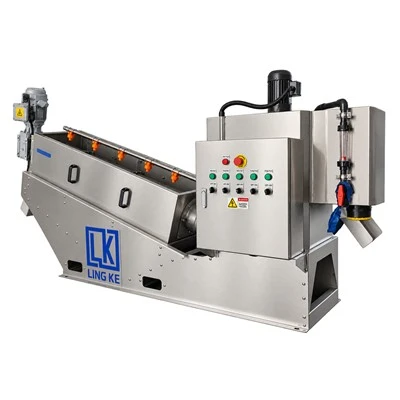

Industrial Packaged Sewage Treatment Plant: Skid-Mounted Modular Wastewater Systems
Industrial buyers, municipal contractors, and engineering firms sourcing a packaged sewage treatment plant from Shandong Lingke Environmental Technology Co., Ltd. (LK Ecotech) require pre-engineered, factory-assembled wastewater separation systems. As a direct manufacturer, LK Ecotech provides engineering-grade technical specifications, treatment process configurations, and product matrices for modular skid-mounted and containerized package plants. This page streamlines technical evaluation, equipment selection, and procurement for decentralized municipal and industrial applications worldwide.
-
![80 M³/d Packed Wastewater Treatment Equipment]() 80 M³/d Packed Wastewater Treatment Equipment
80 m³/d Integrated Wastewater Treatment System combining A/O biological treatment, secondary sedimentation, disinfection and automatic control in one integrated structure. Designed for hotels,...
-
![2 M³/d Small Integrated Wastewater Treatment System For Dairy Wastewater]() 2 M³/d Small Integrated Wastewater Treatment System For D...
This 2 m³/d Dairy Wastewater Treatment System is a compact integrated solution for small dairy facilities and milk processing projects. It combines hydrolysis acidification, aerobic treatment,...
-
![Packaged Sewage Treatment Equipment]() Packaged Sewage Treatment Equipment
Our integrated sewage treatment equipment integrates pretreatment, biological treatment, advanced treatment, disinfection, sludge treatment and other units into one complete set. It uses modular...
-
![Hospital Packaged Sewage Treatment Plant]() Hospital Packaged Sewage Treatment Plant
• This system handles 1-200 cubic meters of hospital sewage every day.
• It uses advanced AAO+MBR technology to treat black and grey water.
• It supports above-ground installation,... -
![Construction Site Packaged Sewage Treatment Plant]() Construction Site Packaged Sewage Treatment Plant
• This is a modular containerized sewage treatment equipment for construction sites.
• It uses MBBR treatment process to remove COD, BOD, ammonia nitrogen and suspended solids... -
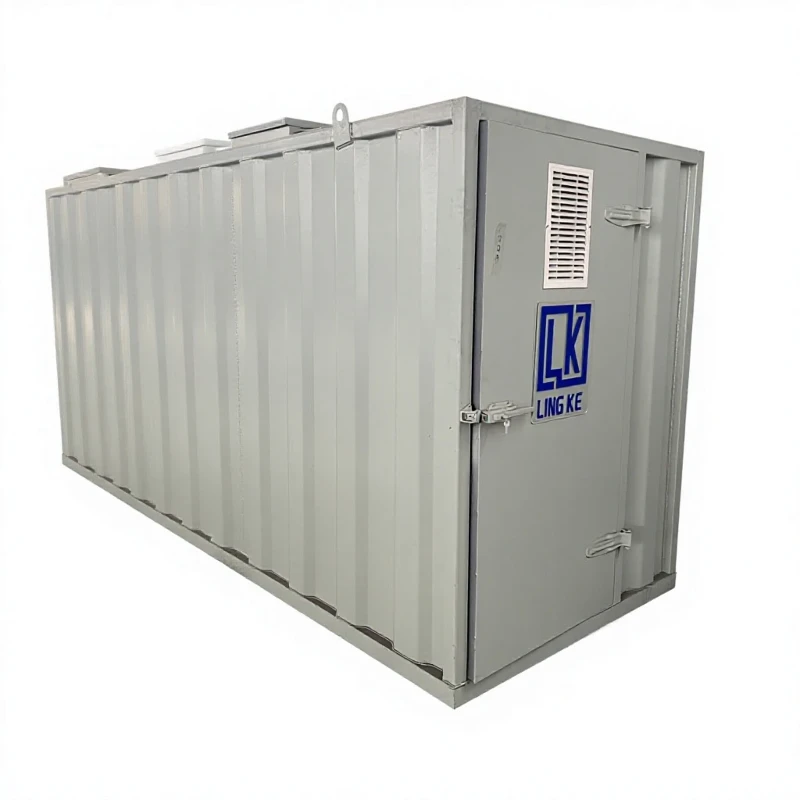
![Containerized WasteWater Treatment Plant]() Containerized WasteWater Treatment Plant
This is a containerized waste water treatment system. It uses premium raw materials for quality assurance. It provides efficient purification. Its effluent meets stable Grade 1A standard. It has a...
-
![Domestic Sewage Treatment Plant]() Domestic Sewage Treatment Plant
• It treats domestic sewage that contains organic substances like cellulose, starch, sugars, fatty proteins, plus pathogenic bacteria, viruses, parasite eggs and inorganic salts.
• It has a... -
![Urban Integrated Sewage Treatment Plant]() Urban Integrated Sewage Treatment Plant
• It is an urban integrated sewage treatment plant. It has a single daily treatment capacity of 100-300 tons. It can be combined to reach a daily treatment capacity of 10,000 tons.
• Its... -
![Residential Sewage Treatment Equipment]() Residential Sewage Treatment Equipment
This equipment treats domestic sewage and similar industrial organic sewage. It makes the water meet national emission standards after treatment. You can install it on the ground or bury it...
-
![MBR WasteWater Treatment Machine]() MBR WasteWater Treatment Machine
• It is a new tech wastewater treatment system. It combines membrane separation technology and biological treatment technology.
• It replaces the clarifier tank of traditional biological... -
![MBBR WasteWater Treatment Machine]() MBBR WasteWater Treatment Machine
• Power: 1kW to 17.7kW (based on different models)
• Applications: Gas stations, service areas, remote fueling facilities, rural sewage treatment projects, small town sewage treatment...


Technology First
Decentralized Municipal Treatment
Rapidly deployed package plants for residential communities, remote villages, and commercial developments without municipal sewer connections.
Industrial Site Wastewater Remediation
Pre-assembled skid units for camp domestic sewage, factory canteens, and processing facility wastewater before final discharge.
Temporary and Mobile Infrastructure
Skid-mounted modular systems engineered for construction camps, mining sites, disaster relief, and seasonal resorts.
Space-Constrained Brownfield Upgrades
Compact footprint package systems designed to slip into existing plant rooms or restricted civil plots.
Product Category
|
Series |
Primary Technology |
Key Target Effluent |
Typical Capacity Range |
Construction Material |
|
LK-STP Packaged Series |
Integrated Biological Contact Oxidation and Clarification |
Municipal Sewage, Domestic Wastewater |
5 to 200 cubic meters per hour |
Carbon Steel with Epoxy Coating or SUS304 |
|
LK-MBR Package Series |
Submerged Hollow Fiber MBR and Biological Aeration |
High-Purity Reuse, Strict Effluent Limits |
10 to 100 cubic meters per hour |
SUS304 or SUS316L Frame, PVDF Membranes |
|
LK-DAF Integrated Series |
Micro-Bubble Dissolved Air Flotation and Skids |
High Fats, Oils, Grease, Suspended Solids |
1 to 150 cubic meters per hour |
Carbon Steel or Stainless Steel |
|
LK-CONT Containerized Series |
Full Enclosure ISO Container Package |
Rapid Transport, Extreme Weather Sites |
2 to 50 cubic meters per hour |
Standard Steel Container Enclosure |
System Configuration
Inlet Screening Unit: Manual or mechanical basket screen and rotary drum filter to capture coarse solids.
Equalization and Lift Module: Flow balancing tank, submersible mixing pumps, and chemical dosing skids.
Biological Treatment Core: Fine-bubble aeration grid, Roots blowers, and submerged biological carriers or contact media.
Secondary Clarification and Membrane Module: Settling hopper with sludge scraper or submerged MBR cassette assembly.
Disinfection Module: UV sterilization chamber or chlorine contact tank.
Sludge Digestion and Dewatering: Sludge holding hopper, air lift transfer lines, and optional screw press.
Automation and Electrical Panel: PLC control cabinet housing electrical switchgear, touch screen HMI, and motor starter relays.

Treatment Process
|
Stage |
Process Description |
Main Equipment and Components |
Removal Target |
|
1. Screening |
Physical removal of large floating debris |
Mechanical fine screen or basket filter |
Large debris and fibrous particles |
|
2. Equalization |
Flow buffering and pH adjustment |
Submersible feed pumps, acid and alkali dosing skids |
Hydraulic surge control; stable pH from 6.5 to 8.5 |
|
3. Biological Reaction |
Microbial oxidation of organic carbon and nitrogen |
Fine bubble diffusers, air blowers, bio-media |
BOD, COD, and ammonia nitrogen reduction above 85% |
|
4. Solid-Liquid Separation |
Gravity settling or physical membrane filtration |
Secondary clarifier hopper or MBR membrane modules |
Suspended solids removal below 10 mg/L |
|
5. Disinfection |
Pathogen inactivation |
UV sterilization reactor or chemical dosing system |
Fecal coliforms and pathogenic bacteria |
Applications
Remote Communities and Townships
Small-scale municipal infrastructure lacking centralized pipeline networks.
Industrial Facilities and Work Camps
Oilfield camps, mining stations, highway service areas, and factory dormitories.
Commercial and Institutional Campuses
Hospitals, schools, holiday resorts, and military compounds.
Disaster Relief and Temporary Infrastructure
Rapidly deployable sanitation hubs for emergency response sites.
Technical Specifications
|
Category |
Parameter |
Specification |
|
Design Influent Parameters |
BOD |
200–350 mg/L |
|
COD |
350–600 mg/L |
|
|
Suspended Solids (SS) |
200–400 mg/L |
|
|
Ammonia Nitrogen |
30–50 mg/L |
|
|
Target Effluent Quality |
BOD |
≤10 mg/L |
|
COD |
≤50 mg/L |
|
|
Suspended Solids (SS) |
≤10 mg/L |
|
|
Ammonia Nitrogen |
≤5 mg/L |
|
|
Power Supply Requirements |
Voltage / Phase / Frequency |
380 V or 415 V, 3-phase, 50/60 Hz |
|
Material Specifications |
Tank Shell |
Q235B steel with external sandblasting and multi-layer epoxy-coal tar anticorrosive coating |
|
Tank Shell Options |
SUS304 or SUS316L stainless steel |
|
|
Internal Piping |
UPVC or pressure-rated stainless steel piping |
Selection Guide
Calculate Hydraulic Flow Rate: Determine average daily flow and peak hourly flow in cubic meters per hour or day.
Analyze Influent Composition: Identify specific contaminants, oil levels, or high toxic loads requiring specialized pre-treatment before the package unit.
Verify Discharge Standards: Confirm local environmental regulations for direct water body discharge or landscape reuse.
Evaluate Site Space and Logistics: Check crane access, truck transport size limits, indoor or outdoor placement, and whether an above-ground skid or buried package tank is needed.
Determine Sludge Handling Protocol: Factor in sludge generation rate to size the internal digestion hopper and external disposal logistics.

Manufacturing and Quality Control
Raw Material Testing: Ultrasonic thickness measurement and chemical composition verification on incoming carbon steel plates and stainless steel sheets.
Welding Execution: Automated welding processes performed by certified welders holding international qualification credentials, backed by 100 percent weld seam liquid penetrant testing for pressure-bearing structural tanks.
Surface Protection: Grit blasting to Sa 2.5 cleanliness profile followed by dry-film thickness verification of multi-layer anti-corrosive epoxy coatings.
Factory Hydrostatic Testing: Full assembly-level pressure and leak testing conducted on all treatment compartments and internal piping networks prior to crating.
Electrical Simulation Testing: Pre-shipment power-on simulation of PLC cabinets, sensor loops, automatic valves, and blower motor performance.
Customized Engineering
Dimensional Adaptation
Custom tank fabrication matched to specific shipping container clearances or tight plant room footprints.
Process Modification
Integration of advanced oxidation or carbon filtration stages for unique industrial wastewater profiles.
Electrical Harmonization
Custom control panel schematics built to match regional voltage standards and communication protocols for plant SCADA integration.
Our Certificate


FAQ
We're well-known as one of the leading packaged sewage treatment plant manufacturers and suppliers in China, featured by quality products and good price. Please rest assured to buy durable packaged sewage treatment plant for sale here from our factory. Customized orders and OEM orders are welcome.
Residential Sewage Treatment Equipment, Integrated treatment device, Containerized WasteWater Treatment Plant