

Introduction
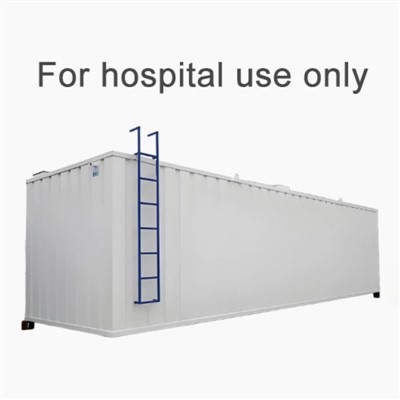
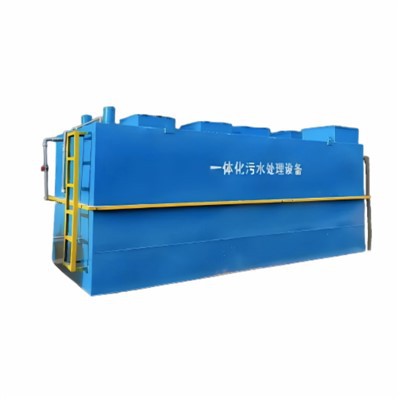
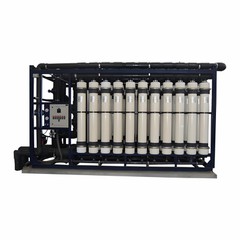
Our integrated sewage treatment equipment integrates pretreatment, biological treatment, advanced treatment, disinfection, sludge treatment and other units into one complete set. It uses modular design and intelligent control to achieve efficient sewage treatment and up-to-standard discharge or reuse. It is widely used in decentralized and small-to-medium-sized sewage treatment projects.

Core Components and Process
Core Components
- Pretreatment: It includes grille and grit chamber. They remove large particle impurities.
- Biological treatment (core): It uses processes like A/O, MBBR, MBR. These processes degrade organic matter and remove nitrogen and phosphorus.
- Advanced treatment: It includes flocculation sedimentation, filtration, advanced oxidation. These steps improve water quality.
- Disinfection: It uses ultraviolet, ozone or chlorine dioxide. These methods kill bacteria to meet standards.
- Auxiliary system: It includes aeration, stirring, chemical dosing, PLC intelligent control. This system ensures stable operation.
Treatment Process
Raw water → Pretreatment → Biological treatment → Advanced treatment → Disinfection → Up-to-standard discharge or reuse

Main Process Types
A/O Process
It combines anaerobic and aerobic processes. It removes nitrogen and phosphorus. It runs stably with moderate cost. It is suitable for domestic sewage and low-concentration industrial wastewater.
MBR Process
It combines membrane separation and biological treatment. It has high sludge concentration (8-12g/L). The effluent turbidity is less than 0.5NTU. It occupies less land and produces less sludge. It is suitable for scenarios with high reuse requirements.
MBBR Process
The principle of MBBR is to use the basic principle of biological method. It adds a certain number of suspended carriers to the reactor. It increases the biomass and types of organisms in the reactor, thus improving the treatment efficiency of the reactor.
Contact Oxidation Process
It combines biofilm method and activated sludge method. The filler has a large specific surface area. Aeration is uniform. It has strong shock resistance.
Core Advantages
Integration
Multiple units are integrated into one. It only occupies 1/3 to 1/5 of the land of traditional facilities. It can be installed underground or above ground.
01
High Efficiency and Stability
The COD removal rate is 80%-95%. The ammonia nitrogen removal rate is over 90%. It has strong shock load resistance. The effluent can reach Grade A or higher standards.
02
Intelligence and Low Consumption
It uses PLC control. It supports remote monitoring and fault warning. It realizes precise aeration and chemical dosing. It produces less sludge and has low operation and maintenance costs.
03
Easy Installation
It is prefabricated in the factory. It can be assembled and debugged on site. The construction period is short.
04
Applicable Scenarios
Domestic sewage:
It is suitable for decentralized sewage in communities, villages, schools, hospitals, scenic spots, etc.
Industrial wastewater:
It is suitable for small and medium-sized organic wastewater from slaughtering, food processing, pharmaceutical and other industries.
Others:
It is suitable for temporary construction sites, remote areas, river channel treatment, emergency treatment and reclaimed water reuse projects.
Treatment Capacity
The single set treatment capacity ranges from 25 to 500 m³/day.
Inlet and Outlet Water Quality
Inlet Water Quality
The sewage is from rural domestic sewage. The main indicators of inlet water quality are as follows:
|
No. |
Item |
Design Inlet Water Quality Index |
|
1 |
PH |
6~9 |
|
2 |
COD |
≤300mg/L |
|
3 |
BOD5 |
≤150mg/L |
|
4 |
TN |
≤40mg/L |
|
5 |
NH3-N |
≤30mg/L |
|
6 |
SS |
≤150mg/L |
|
7 |
TP |
≤4mg/L |
Outlet Water Quality
The design outlet water quality meets the quasi-Class IV water standard in the Environmental Quality Standards for Surface Water (GB 3838-2002). The details are as follows:
|
No. |
Item |
Design Outlet Water Quality Index |
|
1 |
PH |
6~9 |
|
2 |
COD |
≤30mg/L |
|
3 |
BOD5 |
≤6mg/L |
|
4 |
TN |
≤15mg/L |
|
5 |
NH3-N |
≤1.5mg/L |
|
6 |
TP |
≤0.3mg/L |
Note: The values outside the brackets are the control indicators when the water temperature is >12℃, and the values inside the brackets are the control indicators when the water temperature is ≤12℃.
Control System
The whole sewage treatment process is fully automatically controlled by PLC. It requires no manual operation or intervention except for chemical supplement. It can also switch from automatic control to manual control.

Product Features
Excellent and Stable Effluent Quality
The main process uses A2O+MBR biological nitrogen and phosphorus removal plus membrane filtration process, and is equipped with chemical enhanced phosphorus removal function. The effluent quality is comprehensively better than Grade A standard, and the main effluent quality indicators can reach surface water Class IV standard.
Stable Effluent Water Volume and Long Service Life of Membrane
The initial effluent volume of similar products on the market can meet the design requirements. But due to incomplete and immature technology, as the operation time extends (usually half a year to one year), membrane fouling will become increasingly serious, and membrane flux will decrease rapidly, resulting in frequent chemical cleaning. When the system effluent volume is seriously lower than the designed treatment capacity, the membrane module has to be replaced.
Our integrated sewage treatment equipment can effectively control and reduce membrane fouling, maintain membrane flux, extend membrane service life, and ensure long-term stability of effluent volume by integrating variable frequency constant flow effluent technology and intelligent online chemical cleaning technology.
Effective Control and Prevention of Sludge Bulking
When conventional MBR integrated sewage treatment equipment is used to treat domestic sewage, due to low inlet concentration and high sludge concentration in MBR system, sludge bulking often occurs. This sludge bulking is usually caused by abnormal reproduction of filamentous bacteria. At the initial stage of this sludge bulking, the effluent quality will not change significantly, but a large amount of foam will be produced, which seriously affects environmental appearance and hygiene. If not treated in time, when filamentous bacteria become the dominant bacteria in the system, the effluent quality will deteriorate rapidly, accompanied by rapid fouling of MBR membrane, sharp reduction of water output, until the system is completely paralyzed.
Our MBR integrated sewage treatment equipment can effectively control and prevent the occurrence of sludge bulking through process optimization and reasonable configuration combined with intelligent control system, providing a guarantee for the long-term stable operation of the sewage treatment system.
Low Energy Consumption
The power-consuming equipment of BME-MBR integrated equipment during operation mainly includes blower, outlet pump, sludge return pump, etc. Due to the adoption of submerged membrane filtration system outlet technology without vacuum, constant flow variable frequency outlet technology and dissolved oxygen comprehensive utilization technology, the power consumption of integrated BME-MBR equipment can be saved by about 20% compared with similar products on the market.
High Integration and Small Floor Area
Our BME-MBR integrated sewage treatment equipment is a highly integrated equipment. Except for supporting equipment such as grille and regulating lift pump and sludge tank, all other equipment are integrated in the integrated equipment box, and structural optimization design and scientific layout are carried out. No additional fan room and control room are needed at the project site, which can save more than 30% of land compared with similar sewage treatment equipment on the market.

Automatic Operation and Unattended
Our BME-MBR integrated sewage treatment system is equipped with level gauge, electromagnetic flowmeter, differential pressure transmitter and PLC programmable controller. When the water level in the regulating tank reaches the start level, the PLC controls the sewage lift pump to run automatically. After the sewage enters the MBR and undergoes biochemical degradation treatment, when the liquid level in the MBR membrane tank is above the low level, the outlet pump is automatically turned on and off intermittently under the control of PLC. When the outlet pump is turned on, the biochemically degraded water enters the outlet pipeline through membrane filtration under the suction of the pump, and discharges up to standard through the outlet pipeline. At the same time, during the water outlet process, the PLC automatically adjusts the operating frequency of the outlet pump according to the signal fed back by the electromagnetic flowmeter, so that the outlet pump always maintains a constant designed water output. The whole process requires no manual on duty and runs fully automatically.
Intelligent and Remote Monitoring
The intelligent system of our BME-MBR integrated sewage treatment equipment can intelligently judge the operation of each unit and component of the system by real-time monitoring of liquid level, flow, pressure difference, current, voltage, etc., and prompt, alarm, shut down or perform chemical backwashing on the membrane in time.
When internal equipment has abnormal conditions such as overload, short circuit, shutdown, etc., the PLC will take shutdown measures in time and send out sound and light alarm through the alarm.
After the MBR system runs for a certain period of time, the transmembrane pressure difference gradually increases. When the transmembrane pressure difference reaches 30KPa, the PLC considers that the MBR system needs online chemical backwashing. The PLC automatically stops the outlet pump and turns on the backwash pump to perform online membrane cleaning.
When the effect of online chemical backwashing is not obvious, the PLC considers that the system needs offline soaking cleaning. At this time, the PLC will send out sound and light alarm through the alarm.
Our BME-MBR integrated sewage treatment equipment is also equipped with an IoT remote monitoring system. It transmits the equipment operating conditions to the cloud server in real time through 4G network. Users can monitor the equipment operating conditions at any time through PC terminal or mobile APP, and also receive equipment alarm information in real time, effectively reducing the labor cost of equipment maintenance.
Low Sludge Production
On the one hand, because the MBR process itself uses membrane separation technology to replace the gravity sedimentation of traditional process to realize mud-water separation, the membrane intercepts all suspended solids and biological bacteria inside the reactor, resulting in the biochemical system having several times higher sludge concentration than traditional process. On the other hand, the integrated BME-MBR equipment has a large number of biological combined fillers inside, which absorb a large number of microorganisms to grow and reproduce as biological carriers, further increasing the sludge concentration and quantity in the biochemical system. Therefore, the sludge load of the biochemical system is extremely low, a large number of microorganisms are in the endogenous respiration stage, the proliferation rate of microorganisms is slow, and some microorganisms will oxidize and decompose themselves to obtain energy, and then the sludge concentration will gradually decrease. When the activated sludge decreases to a certain extent, the growth and reproduction rate and digestion rate of microorganisms gradually tend to be consistent, and finally the organic matter and microorganisms in the system will reach a balance, and the amount of activated sludge basically remains constant. Therefore, the amount of remaining organic sludge is very small, only a small amount of inorganic sludge that cannot be biodegraded needs to be discharged, thus significantly reducing the organic sludge production during system operation.
Stable Operation in Winter in Cold Regions
When the sewage treatment equipment is used in winter in cold regions, because the outdoor temperature is far below 10 degrees Celsius, the sludge activity is low, and the MBR membrane flux will also decrease a lot. When the environmental temperature is low, there are problems such as unstable effluent quality, insufficient water output, and short membrane service life.
Our BME-MBR integrated sewage treatment equipment maintains the internal temperature of the MBR device above 15 degrees Celsius by setting insulation boards around the MBR device, ensuring that the sludge activity and membrane flux are maintained within the designed range, so that the equipment can still operate normally in winter in cold regions, meeting the designed effluent quality. At the same time, the integrated BME-MBR device does not need to be placed indoors or buried underground, saving the cost of building equipment rooms or civil excavation, and facilitating management and maintenance.
High-standard Anti-corrosion Treatment and Long Service Life of Equipment
The shell of our BME-MBR integrated sewage treatment equipment is made of high-quality carbon steel. The anti-corrosion treatment is carried out in accordance with the anti-corrosion standard of shipping containers. All steel plates and profiles are automatically sandblasted to Sa2.5 level and pre-treated with zinc-rich primer. After the shell is formed, the underwater part is anti-corrosion treated with epoxy primer plus epoxy coal tar pitch paint, and the outside of the pool is anti-corrosion treated with epoxy primer + epoxy micaceous iron intermediate paint + acrylic topcoat. The service life of the shell can reach more than 20 years.
High-end Configuration and Guaranteed Quality
The pumps, fans, membrane modules, pipelines, instruments, automatic control, paint and other equipment and materials configured inside our BME-MBR integrated sewage treatment equipment all use international or domestic first-line brands. They are well-made, have low failure rate, good stability, long service life, and guaranteed quality and after-sales service.
Development Trends
Process Optimization
Strengthen nitrogen and phosphorus removal to adapt to the treatment of high-salt and refractory industrial wastewater.
Intelligent Upgrade
Use IoT + big data to realize unattended operation and precise operation and maintenance.
Resource Utilization
Couple reclaimed water reuse and sludge resource utilization technology to improve comprehensive benefits.
Hot Tags: packaged sewage treatment equipment, China packaged sewage treatment equipment manufacturers, suppliers, factory, Packaged wastewater treatment system, Packaged Sewage Treatment Equipment, Hospital Packaged Sewage Treatment Plant, Residential Sewage Treatment Equipment, Containerized wastewater treatment equipment, Packaged treatment plant