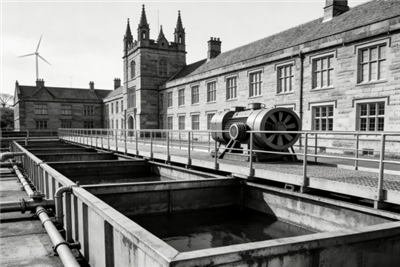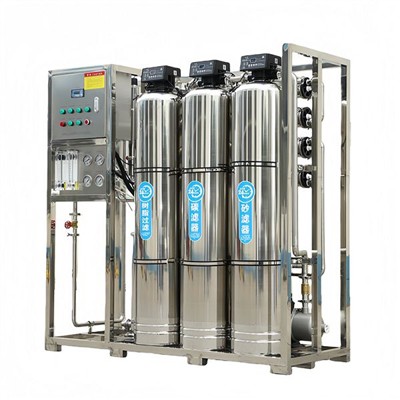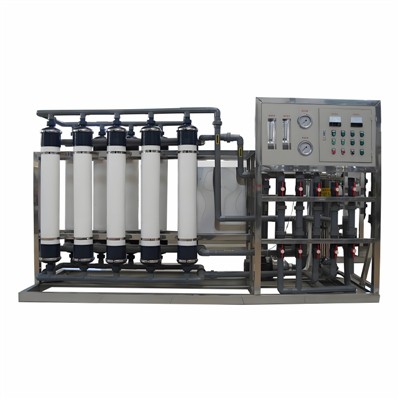
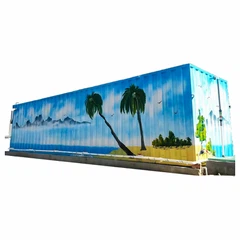
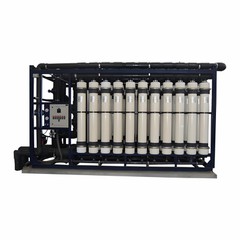
Wastewater treatment equipment comes in various structural forms, each with significant differences in floor space, installation difficulty, and applicable scenarios. The appropriate form must be selected based on actual application requirements. Common structural forms include integrated, vertical, horizontal, square, combined, containerized, rectangular, cabinet-type, flat-panel, carbon steel structure, above-ground, and steel ring structure.
Integrated Structure
Integrated wastewater treatment equipment integrates pretreatment, biochemical treatment, sedimentation, and disinfection processes into a single unit. It features a compact structure, small footprint, convenient installation, and simple operation. Its core advantage lies in simplifying the treatment process, reducing piping connections between devices, and lowering installation difficulty and operational failure rate. Integrated equipment is suitable for treating domestic sewage, rural sewage, and small-scale industrial wastewater, and is particularly suitable for areas with limited space. Depending on the installation method, integrated equipment can be divided into above-ground and underground types. Underground integrated equipment can also effectively save ground space and avoid the equipment being affected by the external environment.
Vertical and Horizontal Structures
Vertical structure equipment has a small footprint but greater height, making it suitable for areas with limited space, such as small wastewater treatment plants and hospitals. Its core characteristic is that the water flows from top to bottom. During the treatment process, gravity assists in the settling of pollutants, improving treatment efficiency. Common vertical equipment includes vertical aerators and vertical sedimentation tanks.
Square and Rectangular Structures
Square structures have a regular shape, a moderate footprint, and are easy to arrange and utilize space, making them suitable for various treatment scenarios. They have high structural strength and can withstand significant pressure and loads, and are commonly used in sedimentation tanks and reaction tanks. Rectangular structures are similar to square structures, but differ significantly in length and width. They are suitable for treatment processes requiring long water flow paths, such as inclined plate sedimentation tanks and oxidation ditches, effectively extending water retention time and improving treatment efficiency.
Modular Structures
Modular structures consist of multiple functional modules, each responsible for a different treatment process, such as pretreatment modules, biological treatment modules, sedimentation modules, and disinfection modules. Their core advantage lies in their high flexibility; the number of modules can be increased or decreased, or the module combination can be adjusted, according to treatment needs. They are suitable for scenarios with complex water quality and varying treatment scales. The installation of modular equipment can be carried out in stages, which facilitates future expansion and modification. At the same time, maintenance can be carried out on a single module without affecting the operation of the overall equipment.
Carbon Steel Structures vs. Steel Ring Structures
Carbon steel structure equipment features high strength, strong load-bearing capacity, and mature manufacturing processes, making it suitable for large-scale wastewater treatment equipment, such as large integrated wastewater treatment systems, sedimentation tanks, and filter presses. Carbon steel structures can be welded and cut to meet specific needs, offering high flexibility, but require anti-corrosion treatment to prevent corrosion in wastewater environments.
Steel ring structure equipment primarily uses steel rings as its support structure, featuring lightweight and structural stability, making it suitable for small to medium-sized wastewater treatment equipment, such as small aerators and filtration equipment. Steel ring structure equipment is easy to install, allowing for quick assembly and disassembly, facilitating transportation and maintenance.
Above-Ground Structures
Above-ground wastewater treatment equipment is installed above ground, offering advantages such as simple installation, convenient maintenance, and easy monitoring of equipment operation. It is suitable for open areas with high groundwater levels, preventing damage from immersion due to high groundwater levels. The disadvantages of above-ground equipment are a larger footprint and greater susceptibility to external environmental influences, requiring protective measures such as sun protection, rain protection, and frost protection.