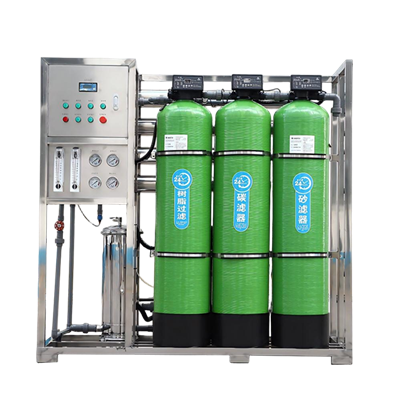

The High-Recovery Industrial RO Water Unit is an engineered, packaged reverse osmosis system built to optimize process water production, maximize industrial water reuse, and minimize concentrate discharge. By balancing membrane physics with feed-water chemistry, this unit reduces freshwater intake and waste management costs while ensuring continuous operational reliability.
Technical Specifications
|
Parameter |
Standard Specification |
|
Product Type |
High-Recovery Industrial RO Water Unit |
|
System Capacity |
Customizable (e.g., 5 to 150+ m³/h) |
|
Design Recovery Rate |
70% to 90%+ (chemistry-dependent) |
|
Feed-Water TDS |
Up to 10,000+ mg/L |
|
Feed Conductivity |
Up to 15,000 µS/cm |
|
Feed Temperature |
5°C to 45°C |
|
Operating Pressure |
15 to 70 bar |
|
Permeate Conductivity |
Less than 10–50 µS/cm (application-dependent) |
|
RO Membrane Element |
High-rejection / High-fouling-resistant polyamide |
|
Membrane Arrangement |
Multi-stage / Multi-pass engineered configurations |
|
High-Pressure Pump |
SS316 / Duplex Stainless Steel (Centrifugal or Positive Displacement) |
|
Pretreatment Array |
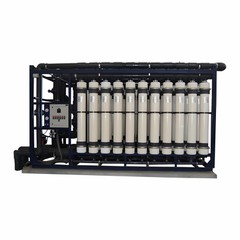
UF / MMF / Softening / Antiscalant Dosing |
|
Skid Frame Material |
SS304 / SS316 / Epoxy-coated carbon steel |
|
High-Pressure Piping |
Super Duplex SS / SS316L |
|
Low-Pressure Piping |
Schedule 80 PVC / UPVC / SS304 |
|
Control System |
PLC + Touchscreen HMI (Siemens / Allen-Bradley) |
|
Power Supply |
380V–480V / 3-Phase / 50–60 Hz |
|
Installation Design |
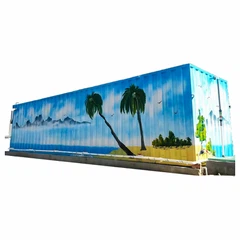
Skid-Mounted Containerized Options Available |
|
CIP Provision |
Integrated Clean-In-Place (CIP) system included |
High Recovery for Industrial Water Optimization
Conventional RO systems often discharge substantial amounts of water as concentrate. Raising system recovery yields higher permeate volume while reducing brine discharge, directly solving core industrial challenges:
Environmental Compliance: Meets strict local wastewater discharge limits and Zero Liquid Discharge (ZLD) prerequisites.
Cost Reduction: Lowers raw water intake fees and concentrate treatment/disposal expenses.
Resource Sustainability: Optimizes overall plant water mass balance in water-scarce regions.
Technical Sizing & Pretreatment Strategy
Feed-Water Quality Drivers
Achieving high recovery safely depends on evaluating specific feed-water constituents:
• Osmotic Pressure: High Total Dissolved Solids (TDS) demand higher driving pressures.
• Scaling Minerals: Hardness (Ca²⁺, Mg²⁺), sulfate (SO₄²⁻), and reactive silica (SiO₂) define the maximum theoretical recovery before precipitation occurs.
• Fouling Indicators: Silt Density Index (SDI), turbidity, TOC, and biological load dictate membrane flux and cleaning schedules.
Tailored Pretreatment Train
To protect membranes under high-recovery operating pressures, pretreatment configurations may include:
• Particulate Control: Multi-media filtration (MMF), cartridge filtration, or Ultrafiltration (UF).
• Scaling Mitigation: Resin softening, acid dosing for pH adjustment, or specialized antiscalant dosing.
• Oxidant Control: Activated carbon filtration or chemical bisulfite dosing to eliminate free chlorine.
Core System Components
High-Efficiency Pump Assembly: Engineered to handle fluctuating salinity demands while reducing overall energy consumption.
Multi-Stage Pressure Vessel Arrays: Balanced element distribution designed to maintain uniform flux across all stages.
Comprehensive Instrumentation Package: Continuous inline tracking of flow rates, operating pressures, differential pressures, and conductivity.
Compact Skid Fabrication: Prefabricated, corrosion-resistant steel framework built for minimal footprint and simple site installation.
Target Applications & Industry Scenarios
Textile & Dyeing Effluent Reuse: Recovering clean process water from secondary wastewater streams.
Power Plant & Boiler Feed: Producing high-purity feed for demineralizers or cooling tower makeup.
Chemical Processing: Concentrating effluent streams while recovering purified process water.
Food & Beverage Utilities: Treating water for utility circuits and general processing.
FAQ
Q: What is the maximum recovery rate this system can achieve?
A: The recovery rate typically ranges between 70% and 90%+. The exact achievable recovery depends directly on your feed-water chemistry, specifically concentrations of calcium, sulfate, silica, and TDS.
Q: How does the system prevent membrane scaling at high recovery levels?
A: Scaling is controlled through a multi-barrier approach: accurate sizing via membrane projection software, precise chemical antiscalant dosing (or pre-softening), automated flushing cycles, and integrated Clean-In-Place (CIP) skid routines.
Q: Can this system handle fluctuations in feed-water quality?
A: Yes. The PLC control system automatically adjusts operating pressures and valve positions based on real-time inline readings (such as conductivity and pressure differentials) to maintain stable output and protect the membranes.
Q: What testing is conducted before the equipment is shipped?
A: Every unit undergoes rigorous factory testing, including skid structural checks, hydrostatic pressure testing of high-pressure piping, electrical/PLC validation, and full functional testing (FAT) prior to packing.
Hot Tags: high-recovery industrial ro water unit, China high-recovery industrial ro water unit manufacturers, suppliers, factory, Stainless Steel DAF Clarifier Unit