
An Industrial Membrane Bioreactor (MBR) System combines biological wastewater treatment with advanced membrane filtration. Designed for high-strength industrial applications, MBR technology replaces conventional secondary clarifiers with ultrafiltration or microfiltration membranes, delivering exceptional effluent quality suitable for discharge or direct reuse.
Technical Specifications at a Glance
The following parameters represent standard design ranges for industrial MBR systems. Actual parameters are calculated based on specific influent water characteristics.
|
Parameter / Feature |
Standard Design Specification Range |
|
Treatment Capacity |
Custom designed from 10 m3/day to 10,000+ m3/day |
|
Influent COD Range |
500 mg/L to 15,000+ mg/L (with suitable pretreatment) |
|
Effluent TSS |
Less than 5 mg/L (typically non-detectable) |
|
Effluent BOD5 |
Less than 10 mg/L |
|
Effluent Turbidity |
Less than 0.2 NTU |
|
Operating MLSS |
6,000 mg/L to 12,000 mg/L |
|
Hydraulic Retention Time (HRT) |
6 to 24 hours (depending on wastewater composition) |
|
Sludge Retention Time (SRT) |
15 to 30+ days |
|
Design Flux Rate |
10 to 25 LMH (L/m2/h) based on raw water parameters |
|
Membrane Pore Size |
0.03 to 0.4 micron (Ultrafiltration / Microfiltration) |
|
Membrane Material |
PVDF (Polyvinylidene Fluoride) / PTFE / Ceramic |
|
Configuration Options |
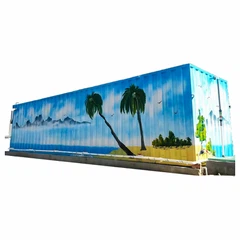
Skid-Mounted, Modular, Containerized, or Civil Structure |
|
Automation Level |
Full PLC Control with HMI Screen & Remote Monitoring |
Integrated Equipment Package
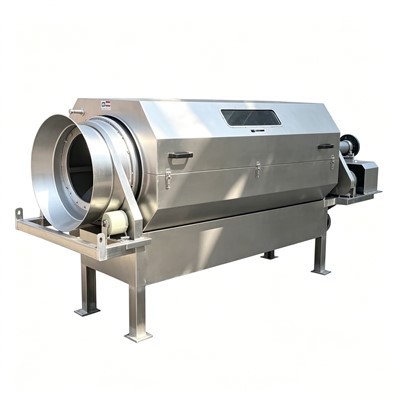
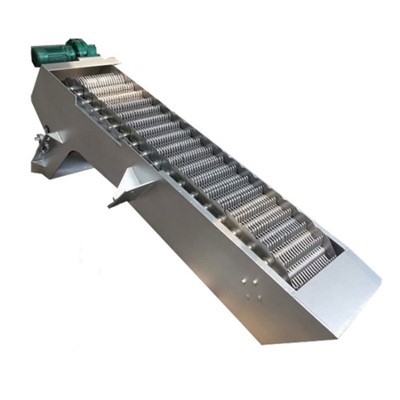
Pretreatment: Fine mechanical screens (1-2 mm mesh) and oil-water separators.
Biological Tanks: Equalization, anoxic (denitritation), and aerobic aeration tanks.
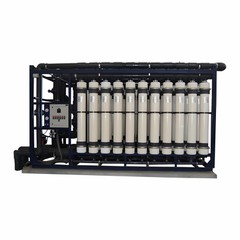
Membrane Module: Hollow-fiber or flat-sheet membrane cassettes and permeate manifolds.
Pumping Infrastructure: Raw water feed pumps, permeate suction pumps, sludge recirculation pumps, and CIP dosing pumps.
Air Blower System: Fine-bubble aeration blowers (biological oxygen supply) and coarse-bubble scour blowers (membrane cleaning).
Cleaning-in-Place (CIP) System: Chemical preparation tank, dosing pumps, and automated flushing valves.
Control & Instrumentation: Integrated PLC cabinet with HMI, online TMP (transmembrane pressure) sensors, DO meters, pH controllers, and flow meters.
Membrane Sizing and Fouling Control
Membrane Area Calculation
Membrane surface area is determined by the total permeate flow demand divided by the design flux:
• Required Membrane Area (m2) = Design Flow Rate (L/h) / Design Flux Rate (L/m2/h)
• Note: Design flux must incorporate a safety margin based on temperature variations, peak hydraulic loads, and long-term fouling allowances.
Comprehensive Fouling Control
Membrane fouling is managed through multiple integrated measures:
• Effective Pretreatment: Fine screening prevents physical debris and fibers from clogging membrane channels.
• Air Scouring: Continuous air bubbling creates shear stress to scour accumulated solids off the membrane surface.
• Automated Relaxation & Backwash: Intermittent suction pauses restore localized flux balance.
• Automated CIP (Chemical Cleaning): Periodic maintenance cleans and intensive chemical cleans remove organic biofilm and inorganic scaling.
Quality Assurance & Manufacturing Inspection
All engineered MBR packages undergo strict quality control prior to dispatch. Structural components and piping are available in Stainless Steel (SS304/SS316L), Carbon Steel with heavy-duty epoxy coating, FRP, or High-Density Polyethylene (HDPE).
Factory Acceptance Testing (FAT) Protocol:
Tank pressure and hydrostatic leak testing
Full weld inspection and non-destructive testing (NDT)
Pump, blower, and valve operational testing
PLC logic verification and simulation of automatic alarm triggers
Instrument calibration check
Complete technical and user manual documentation package
FAQ
Q: What is the main advantage of an MBR system over conventional activated sludge (CAS)?
A: MBR replaces large gravity clarifiers with membrane separation. This enables operation at much higher MLSS levels (6,000-12,000 mg/L vs. 2,000-3,000 mg/L in CAS), resulting in a footprint reduction of 50% to 70%, superior effluent clarity (TSS < 5 mg/L), and stable operation regardless of sludge settling properties.
Q: How often do MBR membranes need to be replaced?
A: With proper pretreatment, correct flux selection, and regular chemical cleaning (CIP), high-quality PVDF or PTFE membranes typically last 5 to 8 years in industrial applications. Ceramic membranes can last 10+ years depending on operating conditions.
Q: Can MBR treated water be reused directly in factory operations?
A: MBR effluent is exceptionally clear and free of suspended solids and bacteria, making it directly suitable for non-potable uses such as landscaping, toilet flushing, and cooling tower makeup. For high-purity process water or boiler feed, MBR effluent serves as an ideal feed for Reverse Osmosis (RO) systems.
Q: How does air scouring affect energy consumption in MBR systems?
A: Air scouring prevents membrane fouling and represents a significant portion of MBR energy usage. Modern MBR designs optimize energy consumption by using cyclic aeration patterns and high-efficiency blowers, balancing biological oxygen demand with scouring requirements to reduce overall kWh/m3.
Q: Is a containerized or skid-mounted MBR system better than a civil installation?
A: Containerized or skid-mounted units are ideal for capacities under 1,000 m3/day, short installation timelines, limited footprint, or modular expansion. Civil concrete installations are generally more cost-effective for large-scale municipal or mega-industrial projects with high daily flow rates.
Hot Tags: industrial mbr wastewater treatment system, China industrial mbr wastewater treatment system manufacturers, suppliers, factory, Scalable Modular Wastewater System