Why Do Industrial RO Systems Use Multimedia Filters?
When people think about an industrial reverse osmosis (RO) system, they often focus on the RO membranes. However, one of the most important components is actually installed before the membranes-the multimedia filtration system.
Without proper pretreatment, even the highest-quality RO membranes can become fouled, resulting in reduced water production, higher operating pressure, and increased maintenance costs.
That is why multimedia filters are considered a standard component in most industrial RO systems.

What Is a Multimedia Filter?
A multimedia filter is a pretreatment unit designed to remove suspended solids and other contaminants before water enters the RO membranes.
Depending on the raw water quality, a typical industrial pretreatment system may include:
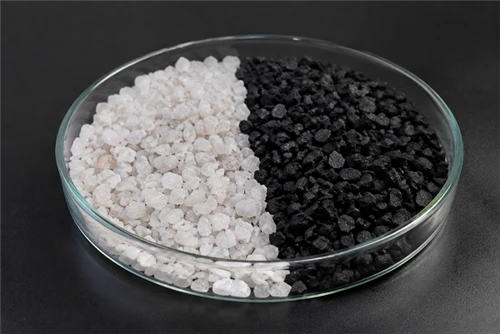
1.Quartz sand filter
2.Activated carbon filter
3.Water softener (optional)
Each stage performs a different function to improve water quality and protect downstream equipment.
Quartz Sand Filter: Removing Suspended Solids
The first filtration stage usually consists of a quartz sand filter.
Its primary function is to remove:
1.Sand
2.Sediment
3.Rust particles
4.Suspended solids (SS)
By reducing larger particles, the quartz sand filter prevents excessive fouling of the following treatment stages and helps maintain stable system performance.
Activated Carbon Filter: Removing Chlorine and Organic Matter
After particulate removal, water often passes through an activated carbon filter.
This stage is mainly responsible for removing:
1.Residual chlorine
2.Organic compounds
3.Odors
4.Color
Residual chlorine can damage RO membranes, especially thin-film composite (TFC) membranes commonly used in industrial systems.
Activated carbon effectively adsorbs chlorine and organic contaminants, helping extend membrane service life.
When Is a Water Softener Needed?
In areas with hard water, calcium and magnesium ions can cause scale to form on RO membranes.
A water softener uses ion exchange resin to remove hardness before the water enters the RO system.
Although not every project requires a softener, it is highly recommended when treating groundwater or other high-hardness water sources.
Benefits of Multimedia Pretreatment
A properly designed multimedia filtration system offers several important advantages:
1.Protects RO membranes from fouling
2.Reduces maintenance frequency
3.Extends membrane lifespan
4.Improves overall system stability
5.Lowers long-term operating costs
6.Maintains consistent water production
For industrial users, effective pretreatment often delivers greater long-term value than simply choosing a higher-grade membrane.

Ling Ke Environmental Technology Pretreatment Solutions
At Ling Ke Environmental Technology, every industrial RO system is designed according to the customer's raw water quality, treatment capacity, and application requirements.
Our pretreatment solutions can be configured with quartz sand filters, activated carbon filters, water softeners, and other filtration equipment to provide reliable protection for RO membranes.
By selecting the appropriate pretreatment combination, we help customers achieve stable operation, lower maintenance costs, and longer equipment service life.
Conclusion
An industrial RO system performs only as well as its pretreatment system.
Multimedia filters remove suspended solids, chlorine, and hardness before water reaches the membranes, helping maximize efficiency while reducing maintenance costs.
For any industrial water treatment project, investing in proper pretreatment is one of the smartest decisions you can make.